Peoples Forum for Peace in Latin America and the Caribbean
Our Hope in Latin America and the Caribbean: a proposal for a Peoples Forum for Peace in Latin America and the Caribbean.
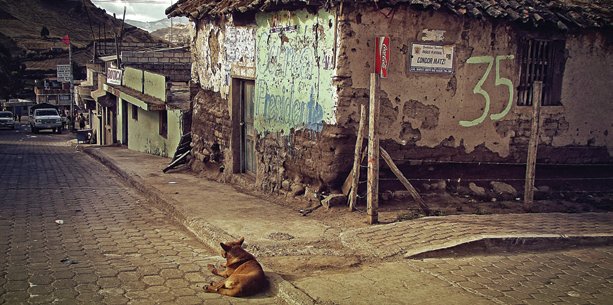
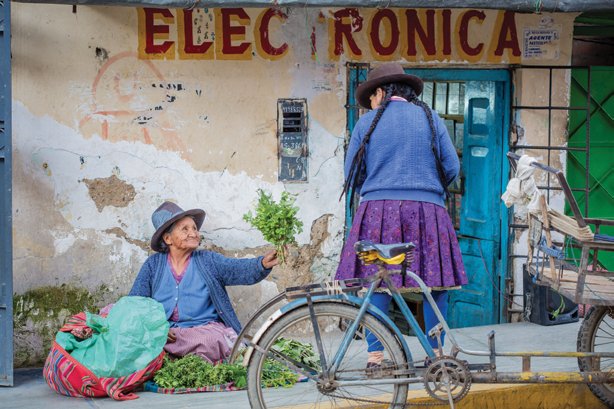
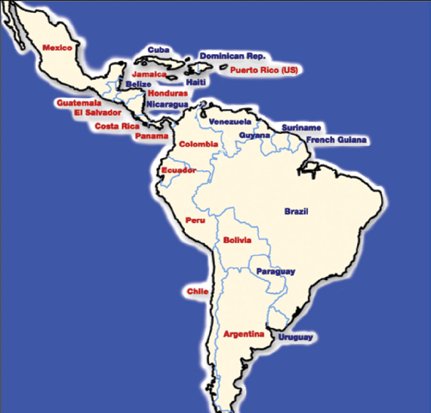
Frequently, it is said that Latin America and the Caribbean (“our region”) is a peaceful continent. However, for many of its inhabitants this is not the case, since they live in internal or external conflicts that are affecting everything they do, as well as their futures, both materially and non-materially. In recent encounters of peace, people of our region are more and more concerned about peace in the region, individually and collectively. The collective tension seems to be ascending strongly — in particular the tension related to cities (congestion, unemployment, indifference) — and leaves behind many illnesses, dramatically increasing the consumption of barbiturates. The individual peace feels fragile, as demonstrated by stress, anxiety, suicides, and depression, appearing more frequently than ever before.
Our peace is weakening quickly, as seen by the great arms race inside the region; by an economic and social system that does not result in higher levels of welfare with social justice for most of the population; by the fact that traditional approaches to peace begin to show their unavoidable limitations. Border-related problems that have not been resolved satisfactorily add further fuel for regional instability, alongside external elements — the consumption of drugs by countries outside the region, wars elsewhere in the world — since human insecurity is contagious in a world without borders.
Many people have begun to notice inside our region that social conflicts of a very old, “structural” nature have begun to flourish again, as these have not been solved for decades — poverty, inequity, marginalization, environmental destruction, and social uncertainty. It is essential to bring to the regional agenda the topic of collective peace and human security, including the security of all beings and sentient beings. This change in emphasis should not necessarily be inserted into existing institutional organizations, as these have been part of the problem, not the central axis of the solution.
The Institute proposes the formation of a Peoples Forum For Peace In Latin America And Caribbean (PEFOPLAC). The main reason for a succinct description is that this forum should be something that is born from a popular base, with different mechanisms, and should be born in a spontaneous and consensual form. This forum corresponds to a new concept of peace, and for that reason will possibly be born in ways very different to many other groups in support of peace in our region and in the whole world.
In the 1600s, the Treaty of Westphalia gave authority to the notions of sovereign governments and nation states. It is for that reason that the concepts and traditional focus on peace at the international level are embedded by countries (governments) — a focus that today limits collective work in a world without frontiers. We live in a new world: the world of collective existence, governed by individualistic and materialistic values and attitudes. What happens in a country, or a group of countries, will affect all; the geopolitical frontiers of any nation already go far beyond its agreed borders. The traditional approach fails to support a genuine process for collective peace. These traditional approaches have relied on three fundamental pillars — political, military and economic — offered separately or as a package, and based on the results we see around the world, these pillars have not been effective and are in need of fundamental reinforcement.
The economic solutions have demonstrated that there is not a correlation between economic advancement and peace: if this were the case, all developed countries would not be at war or a foot away from war — and developing and poor countries are not, in fact, the sources of war and conflict; it is sometimes just the opposite. The military and arms solutions don’t possess the incentives for peace — on the contrary, arming two contenders has meant more conflicts, and more brutal conflicts affecting casual victims outside the channels of armed groups. The political solutions have also demonstrated big limitations: unless human collective consciousness grows, political dialogues will never heal, and at best will be palliative for a short period of time. All of this calls for a paradigmatic, fundamental change.
First, peace is a state of being and not a “thing.” Peace cannot be bought in the supermarkets. Even with a lot of material wealth, peace should not be conceptualized as merchandise; peace has to be self-realized in our inner self. A Forum of this nature should be guided from its beginning to the self-realization of peace in all the inhabitants of our region — armies, governments, guerrillas are not the source of this sustainable peace.
Second, peace in the region depends on inner peace. There will not be regional peace without the members of this region being at peace. The proposed Forum is for the creation and nurturing of inner peace, both individual and collective, and it is there where efforts should be placed.
Third, inner peace requires inner and outer self-healing, and it demands the healing of our natural environment — it is necessary to heal both the external world (container) and ourselves (content). It is essential to understand that if we are not free of inner anger, it is not possible to attain inner peace; with the same token, there is no inner peace if our external collective existence is completely stressed.
Fourth, healing is born fundamentally out of silence, and out of our capacity to know, to grow, to feed, to enlarge, and to unfold all aspects of our life from that inner silence — not silence as ceasing to speak, but as an ability to connect with the universal essence of life. This new paradigm of peace leans on its internal logic, which translates into a synergetic sequence: regional peace, as a function of inner peace; inner peace, as a function of self-healing; and self-healing, as a function of the power of our silence.
Foremost, the Institute will disseminate the abovementioned concept and paradigm for regional peace. It will not suggest as a priority the creation of bureaucracies and institutions. Instead, the collective attention should focus on a media campaign of massive popularization of this new concept of regional peace, and leave the initiative to the people — not governments or other organizations — to create and nurture local mechanisms of peace. Whoever wants to join this organizational structure should be welcome, not with the idea of leading or constraining the grassroots from blooming, but as a form of collaborating in the popularization of this regional challenge. This would require establishing contacts with the media, radio and television, speaking with the leaders of the region who naturally go beyond governments, and creating popular networks of local peoples, spiritual leaders, and other groups of capital importance around regional peace.
The creation of the Forum is a result, and not the beginning, of this movement for peace in the region. It will be the duty of each community to create or not create this Forum, and to settle the participation mechanisms within it. This is not an initiative to be imposed from the top down, or to impose a uniform way to operate in the future.
Latin America of Peace. Latin America in Peace. Latin America for Peace.
Join the circle receiving ZIHT's dispatches.
A weekly reflection, a new publication, or a call to action from the field — direct from the Institute, in the same voice you find on this site. No noise, no solicitation.